
What is Ayurveda?
Ayurveda is the most ancient medical system in the world. It is a very Holistic medical system that defines life as union of Soul with body, mind and sensory organs. Ayurveda says, you are not your body, it is just the structure which holds you. You are neither the thoughts of your mind nor the sensations of your sensory organs. You are the soul who knows all these layers of existence. Ayurveda has two functions. Svasthavritta which is preventive medicine and Aturavritta the curative medicine.
Svasthavritta (preventive medicine) is the harmonious way of living by fulfilling the needs of body, mind, senses and the soul. Ayurveda says that health is possible only when you maintain the integrity of all layers of your existence. Hence Ayurveda advices a way of life to achieve four goals of life called Dharma (actions contributing to sustenance of universe), Artha (wealth), Kama (Pleasures including health) and Moksha (Liberation from worldly troubles). Ayurvedic living begins with a healthy personal life, family life and social life to fulfil your Dharma. Ayurveda inspires you to earn wealth through your profession.
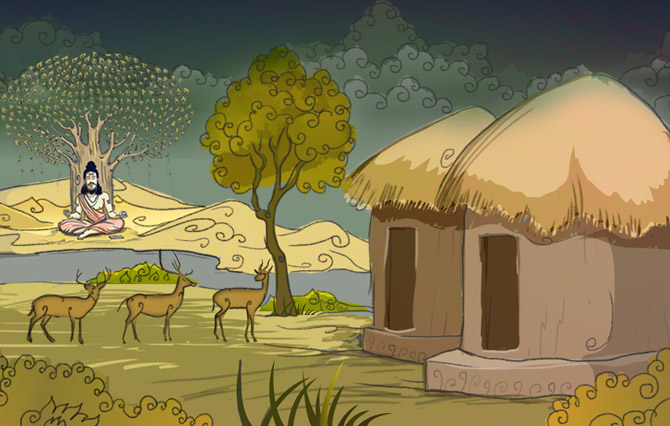
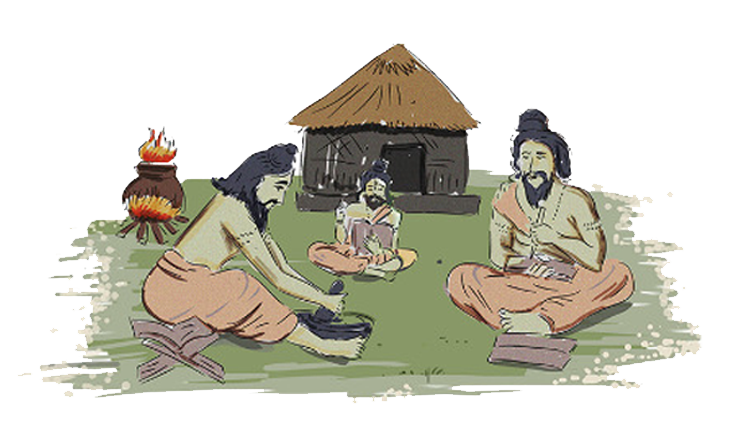
It believes that a longer life without enough resources is still inferior and unhealthy. Because finding joy through having good food, wearing comfortable and good looking clothes, building safe and spacious house, listening to music and art and spending time in gardens are the third goal of life. Thus Ayurveda envisions a healthy and joyful worldly life for common man. At the same time there are daily rituals and prayers to Gods for the benefit of this life and life after death. Ayurveda proposes a natural spiritual evolution which finally leads to Liberation of soul from this worldly life.
Vata Dosha constitutes air and space elements. Vata governs the beating of heart, the flow of breath, blood circulation, cellular mobility, all muscle contractions, communication between body and mind, and tissue movements, in short, all body movements. Pitta Dosha constitutes water and fire elements. Pitta largely controls digestion, intelligence, understanding, nutrition, transformation, metabolism, and body temperature. Kapha Dosha is composed of water and earthy elements. It lends cohesiveness to the body entities and maintains the form. Further, it moisturizes the skin, lubricates the joints, protects the tissues, and maintains immunity.
1.
Preparation
Before the treatment, the therapist will have a consultation with you to understand your health concerns, dosha constitution, and specific needs. They will select the appropriate oil or liquid based on your dosha and the desired therapeutic effects.
2.
Setup
A comfortable headrest or cushion is provided to support your neck and head. The therapist will adjust the temperature of the oil or liquid and position the vessel from which it will be poured.
3.
Continuous Pouring
The therapist will start pouring the warm oil or liquid in a gentle and rhythmic flow onto the center of your forehead, just above the eyebrows. The liquid will trickle down your scalp and hair, creating a soothing sensation. The pouring is usually done in a slow and consistent manner for a specified duration, typically ranging from 30 minutes to an hour.
4.
Relaxation
During the treatment, you are encouraged to relax and let go of any tension or stress. Many people find the sound and sensation of the liquid pouring to be deeply calming, inducing a meditative state and promoting mental clarity.
5.
Benefits
Shirodhara is believed to have a wide range of benefits, including stress reduction, relaxation of the nervous system, improvement in sleep quality, balancing of the doshas, enhancement of mental focus, and relief from anxiety, headaches, and certain neurological conditions.
6.
Post-Treatment
After the pouring is complete, you may be given a few minutes to rest and allow the therapeutic effects to settle. Some therapists may also offer a gentle head or scalp massage to further enhance the relaxation.
The specific oils or liquids used, as well as the duration of the treatment, may vary based on individual needs and the expertise of the practitioner.
Ready to Restore Harmony in Your Mind, Body, and Spirit?
Appointment
Frequently Asked Questions
Please note that this information is for general purposes only and should not replace professional medical advice. It is always recommended to consult with a qualified Ayurvedic practitioner for personalized guidance and treatment.
An Ayurvedic consultation involves an in-depth assessment of your dosha constitution, current health condition, medical history, and lifestyle factors, such as pulse reading, tongue examination, and more.
Ayurveda can address a wide range of conditions, including digestive disorders, hormonal imbalances, stress-related issues, skin problems, respiratory conditions, and musculoskeletal disorders. It aims to treat the root cause of the imbalance rather than just alleviating symptoms.
The duration of treatment and the time it takes to see results can vary depending on the individual's condition, severity, and commitment to the treatment plan.